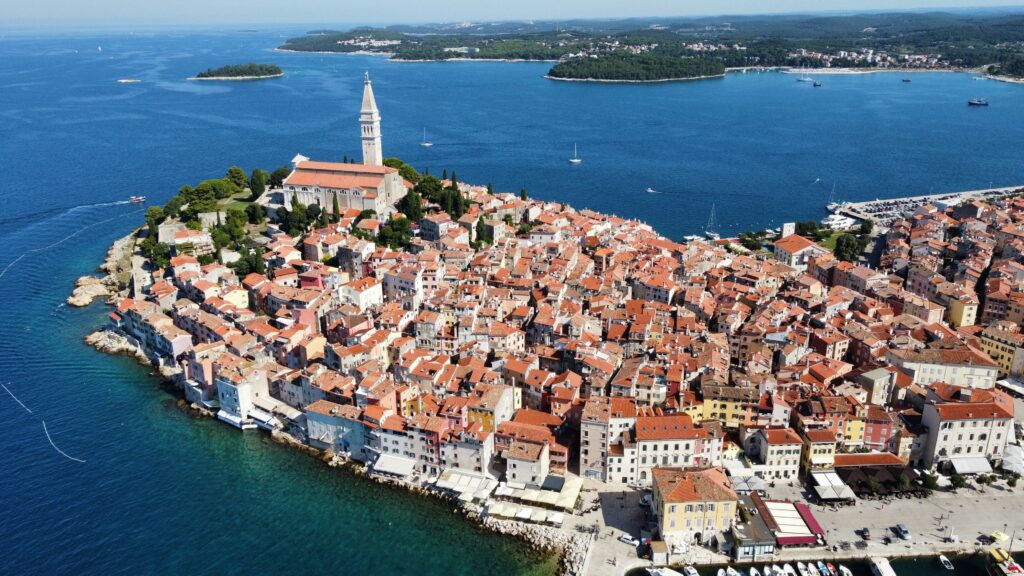
Perched on the Istrian Peninsula, Rovinj is one of those places that immediately wins you over — a jumble of colorful houses cascading into the blue Adriatic, narrow cobblestone lanes that seem to wander with purpose, and a scent of salt, lavender, and espresso floating through the air.
It’s a small town, but one that seems to hold a thousand stories — of fishermen, artists, and travelers who came for a day and decided to stay much longer.
A Glimpse Into Rovinj’s History
Rovinj began as a small island settlement before it was connected to the mainland in the 18th century. Over the centuries, it’s been ruled by Romans, Venetians, Austrians, and Italians — and you can feel all those layers in its architecture and culture.
The town’s pastel façades and shuttered windows still carry a touch of Venetian influence, and when you hear the gentle mix of Italian and Croatian spoken in cafés, you realize how deeply the two worlds blend here.
Rovinj was once a working fishing village — and in many ways, it still feels like one — but today, it’s also one of Croatia’s most loved coastal destinations, attracting visitors who want a quieter, more romantic side of the Adriatic.
The Iconic Church of St. Euphemia
At the heart of Rovinj’s skyline is the Church of St. Euphemia, crowned by a tall bell tower modeled after Venice’s St. Mark’s Campanile. Climb the tower for one of the best views in all of Istria — terracotta rooftops below, the turquoise Adriatic stretching endlessly beyond.
The church itself, built in the 18th century, holds the relics of Saint Euphemia, Rovinj’s patron saint. Local legend says her marble sarcophagus mysteriously floated to shore centuries ago, sealing her place as the protector of the town.
The surrounding streets are some of the most picturesque in Rovinj, filled with artists’ studios, galleries, and quiet cafés perfect for a morning espresso or an evening glass of wine.
Wandering the Old Town
Rovinj’s old town is a delight to get lost in — literally. The narrow lanes twist uphill and down toward the sea, sometimes ending in hidden stairways that lead straight to the water.
Grisia Street is the most famous — a cobbled lane lined with artists displaying their work outdoors, especially in summer when it turns into an open-air gallery. You’ll also find small shops selling handmade jewelry, olive oil, and lavender soap — great local souvenirs.
As you wander, look for the Balbi’s Arch, once the main gate into the old town, decorated with both Venetian and Ottoman symbols — a reminder of Rovinj’s layered past.
For a peaceful pause, find a spot along the waterfront promenade and watch the fishing boats return at sunset, the light bouncing off the water in gold and rose tones.
Things to Do in Rovinj
- 🚤 Take a Boat Trip Around the Rovinj Archipelago: 14 small islands surround the town, and a short boat ride lets you see Rovinj from the sea — especially stunning at sunset.
- 🏖️ Swim at Lone Bay or Mulini Beach: Both are within walking distance from the old town and offer clear turquoise water perfect for a dip.
- 🖼️ Visit the Batana Eco-Museum: A small but fascinating museum dedicated to Rovinj’s traditional wooden fishing boats, the batana.
- ☕ Café-hop along the Harbor: Start your day with coffee at a waterfront café and end with a glass of Istrian wine as the town lights shimmer on the water.
- 🚲 Cycle through the Punta Corrente Forest Park (Golden Cape): Shady trails, sea cliffs, and swimming coves — a perfect escape just 10 minutes from town.
When to Visit Rovinj
Rovinj enjoys a mild Mediterranean climate, which makes it appealing almost all year:
- Spring (April–May): Quiet streets, blooming flowers, and gentle sunshine — great for exploring before summer crowds arrive.
- Summer (June–August): Lively atmosphere, outdoor concerts, and warm sea temperatures — but book early, it’s peak season.
- Autumn (September–October): Fewer tourists, sea still warm, and beautiful sunsets — many locals say it’s the best time to visit.
- Winter (November–March): Calm and peaceful, ideal for travelers who want to experience the town’s local rhythm without the crowds.
Getting There
Rovinj is located in Istria, western Croatia. It’s about a 40-minute drive from Pula Airport, or 3 hours from Zagreb. There are also seasonal ferries connecting Rovinj to Venice, which makes it a lovely two-country getaway.
Within Rovinj, everything in the old town is walkable — cars are restricted in the narrowest streets, so wear comfortable shoes and take your time exploring.
Final Thoughts
Rovinj feels like the kind of place where time slows down. Days begin with the smell of coffee and the sound of church bells, and end with golden light spilling across the harbor.
It’s romantic, yes — but also deeply real. Fishermen still mend their nets by the docks, and locals chat in the square as they’ve done for generations.
Whether you’re drawn by the sea, the art, or simply the calm rhythm of life, Rovinj is one of those towns that lingers in your memory long after you leave.
If you’re planning a trip through Croatia, put this coastal gem at the top of your list.
Author’s Note
My goal with this blog is to highlight towns and cities that blend beauty, history, and authenticity. Rovinj has all three in abundance — and even through photos and stories, it’s easy to see why so many travelers fall for its charm.
Leave a Reply