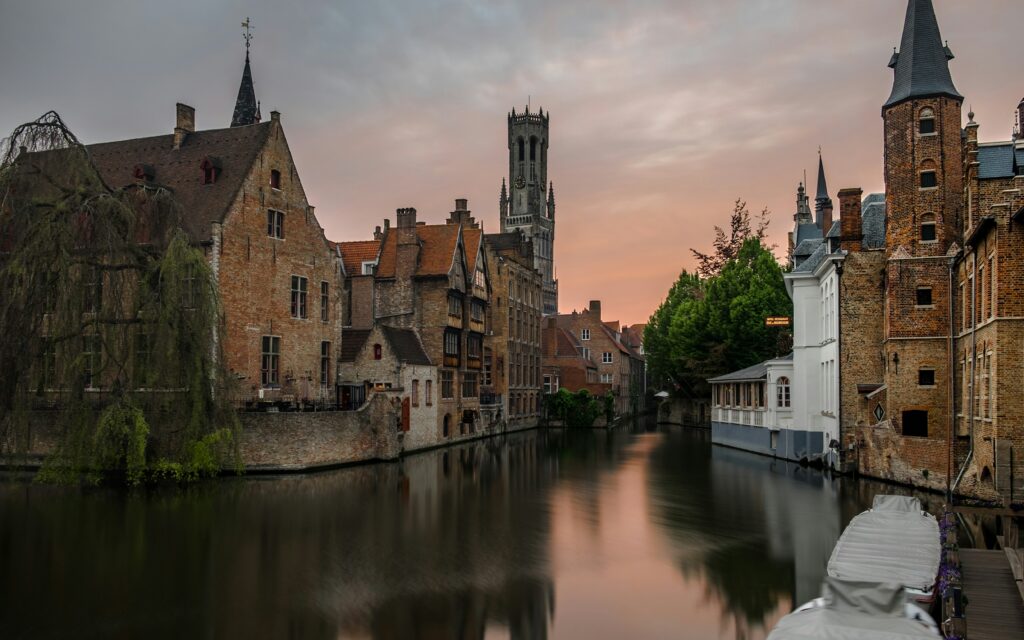
If you’ve ever imagined what a medieval European town might look like if it were frozen in time, Bruges comes very close.
Often called “The Venice of the North”, this small Belgian city is a network of calm canals, stone bridges, and cobbled lanes — every turn looks like a postcard waiting to happen.
Whether you come for a day or linger for a few nights, Bruges has a way of slowing you down — of making you walk a bit slower, linger by the water, and savor the rhythm of a city that’s quietly elegant.
A City Steeped in History
Bruges (or Brugge in Dutch) rose to prominence in the Middle Ages as a major trading hub, thanks to its connection to the North Sea. By the 14th century, it was one of Europe’s richest cities, known for its merchants, guilds, and beautiful Flemish architecture.
But when the waterways silted up and trade shifted elsewhere, Bruges fell into centuries of quiet — which, ironically, helped preserve it.
Today, its streets, squares, and buildings still carry that old-world atmosphere that earned the entire historic center a UNESCO World Heritage title in 2000.
Walking through Bruges feels like stepping into a living museum — only one filled with chocolate shops, cozy cafés, and horse-drawn carriages clip-clopping over cobblestones.
The Belfry and Markt Square
At the heart of Bruges lies the Markt, a wide and lively square surrounded by colorful step-gabled houses. The star of the show is the Belfry of Bruges, a soaring 83-meter tower that has stood since the 13th century.
Climb its 366 steps for panoramic views of the old town and canals — it’s a workout, but absolutely worth it. The bells ring out over the rooftops, echoing through the narrow lanes below.
Around the square, cafés and restaurants spill out onto terraces, perfect for a break with a cup of Belgian coffee or a local beer.
Canals and Cobblestones
The canals are what make Bruges unforgettable. Take a boat tour, and you’ll see why — bridges arch gracefully over still water, ducks drift by, and medieval façades reflect in the ripples. It’s quiet, romantic, and utterly peaceful.
Walking is just as rewarding. Start at the Rozenhoedkaai, one of the most photographed spots in town, where the water, willow trees, and rooftops create that perfect postcard view. From there, follow the cobbled lanes to discover small squares, old almshouses, and little chocolate boutiques that smell like heaven.
Every corner seems to have a story, and even just wandering aimlessly feels like part of the experience.
Art, Culture, and Chocolate
Bruges might be small, but it’s packed with art and history. Visit the Groeningemuseum, home to a remarkable collection of Flemish Primitives — painters like Jan van Eyck and Hans Memling.
If you’re into something lighter (or sweeter), stop by one of the chocolate museums or simply follow your nose to a local chocolatier. Bruges is known for its artisanal chocolate shops, many of which make everything by hand.
And of course, Belgium’s other famous export — beer — has its place here too. The De Halve Maan Brewery in the city center has been brewing since the 16th century and offers fun tours (with a tasting at the end).
Things to Do in Bruges
- 🛶 Take a Canal Boat Tour: A classic way to see the city’s hidden angles and get your bearings.
- 🏰 Climb the Belfry of Bruges: For unbeatable views and a sense of the city’s history.
- 🍫 Visit a Chocolatier: Try pralines or truffles from shops like The Chocolate Line or Dumon.
- 🚶♀️ Stroll to Minnewater (The Lake of Love): A peaceful park area just south of the center — ideal for photos and a quiet moment.
- 🖼️ Explore the Groeningemuseum: Discover Bruges’ artistic heritage through centuries of Flemish art.
- 🍺 Enjoy a Local Beer: Sample Brugse Zot or Straffe Hendrik — two local brews with centuries of tradition.
When to Visit
Bruges is beautiful in every season, but your experience will vary:
- Spring (April–May): Flowers bloom along the canals, and the weather is mild — great for walking and photography.
- Summer (June–August): Lively and full of outdoor energy, but expect crowds. Early mornings and evenings are magical.
- Autumn (September–October): Golden leaves, fewer tourists, and cozy evenings make it a favorite time to visit.
- Winter (November–January): The Christmas market turns the city into a festive wonderland, complete with lights and mulled wine.
Getting There
Bruges is just over 1 hour by train from Brussels, with frequent daily connections. The train station is a 15-minute walk (or short bus ride) from the city center.
If you’re coming by car, park in one of the lots on the edge of the old town — Bruges is best explored on foot. Bicycles are also a lovely way to get around; the city’s size makes it perfect for easy cycling.
Final Thoughts
Bruges is one of those towns that feels perfectly balanced — romantic without being artificial, historic without feeling stuck in the past.
It’s a place to slow down, wander, and soak in centuries of charm at your own pace. Whether you come for a weekend or just a day, Bruges has a quiet magic that stays with you — in the sound of church bells, the reflection of old houses in the canals, and the smell of waffles drifting through the streets.
If you’re looking for a town that captures the best of Europe’s old-world beauty, Bruges should be near the top of your list.
Author’s Note
I’ve always been drawn to towns that seem to live in their own rhythm — places where every corner feels like a story. Bruges is exactly that kind of place. Even without visiting (yet), it’s one of those cities that instantly pulls you in with its calm and beauty.
Leave a Reply